Chapter 24 - 'Hepcats'
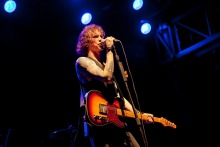
These punk rock oddball blokes are a menace live. Their frontwoman stalks the ground like a caged panther. Great, weird, noisy stuff.

These punk rock oddball blokes are a menace live. Their frontwoman stalks the ground like a caged panther. Great, weird, noisy stuff.
A number of years ago, in the beginning years of college I was dating a guy that played guitar in a punk band based out of Pittsburgh. Living the life of a musician’s girlfriend was fun and busy. Very very busy. We were driving the two hours each way every weekend for practices and shows, I can’t even imagine how many miles I actually put on my car while I was with him.
During shows, us girlfriends would get to man the merch table, hawking cds, shirts and bumper stickers to various audiences around the state. I can remember being out on tour one summer in the van that the band had finally managed to acquire, we were on our way to a show at a skate park in the middle of nowhere. I also know that on that trip I read Harry Potter for the first time. Maybe Harry Potter isn’t exactly what one expects from a girl in the punk rock scene, but I was addicted.
I suppose those sorts of differences are the reason I never actually moved to Pittsburgh to live with my friends and to continue dating the guitar player I’d been with for almost two years. I stayed in my home town, finished college and continued to listen to punk music through it all. I was just no longer on tour with the boys. The next summer they found themselves playing on the Warped Tour and on a major West Coast tour. I’m glad I stayed home, that’s a lot of driving and not enough Harry Potter.

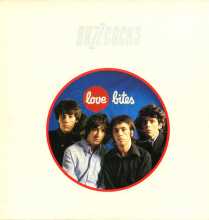
There's a reason the Buzzcocks's music continues to play in the soundtracks of feature films to this date. Scatological and puerile as much of their material may be, their sound has hardly aged a day. Throw "Ever Fallen In Love" or "Fast Cars" in a playlist alongside Green Day and the Offspring and see if anyone notices the decade shift. It seems as though pop punk throughout all its generations has remained evolutionary stable, churning itself up again and again in similar forms while hardly ever growing stale. It's the shark of the punk ecosystem. It doesn't change, it doesn't age.
Even now that popular music has split itself into about a billion different sub-genres, bands still find exciting work to be done within the pop punk arena. Just look at the Thermals and their recent theological excavations. They take a sound once reserved for brash adolescent effluence and transform it into a vehicle for philosophical discussion. If anything, pop punk has evolved into something more intelligent, more thoughtful, and more important (if less widely consumed) than it's ever been.
It seems to snake along a contrary path to that of its genre brethren. Hardcore punk was born of political need, as angry commentary at a time that needed youth dissent to be shouted, not sung. Its angst conjured its own breed of intellectual discourse and ultimately housed many progressive political and social movements. Hardcore was a palpable force in a world that was entirely too quiet. So why has it since smoldered down to basement screamo while its candy-coated cousin has taken up the intellectual helm?
Browse what passes for hardcore these days and you'll find very little of the Black Flag, Minor Threat school of thought that helped birth the sound. Even the lingering vegan straight-edge subculture seems to have accepted that its music is little more than a sermon directed at the choir. It's not because the music is too heavy; Pitchfork readers seem to have no problem diving into the latest avant-garde doom metal release, and there's plenty that's loud topping the Hype Machine. But when late emo mangled up both hardcore and pop punk during its brief century-ending run, it seems to have spit out only the latter intact.
It could be because there's really nowhere to go with pop punk. You could consider hardcore to have died off, or you could trace its lineage into the post-hardcore, math-rock, and proto-prog subgenres it spawned. Perhaps it didn't die; perhaps it only fractioned into increasingly minute factions that flash and burn out as quickly as they're invented. Perhaps it's a radioactive isotope, while pop punk is as stable as stable gets. It's the atom you can't split. It's the genre you can't break. The formula is tried, true, and endlessly pleasing no matter what kind of content you layer on top of it.
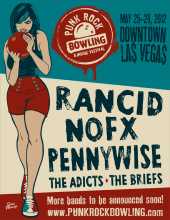
Punk Rock and Bowling are two things I happen to enjoy. Add them together and throw in a few days in Las Vegas and I’m a pretty happy girl, actually a very happy girl. Started a little over a decade ago, Punk Rock Bowling has grown into a three day event which takes over Downtown Vegas with a storm of fans and bands.
Featuring countless bands from the history of Punk Rock, there’s sure to be a show to suit every fan. The music festival features eight bands performing each day in an outdoor festival setting (all ages, with adult accompaniment) and then there will be several late night club shows in smaller venues each night (21+ only, sorry kiddos).
If you want to get involved in more than the music, there’s also the namesake bowling tournament where a couple hundred 4 person teams vie for the prize. (The waitlist for a lane can be a pretty crazy experience, so if you want a shot, get to it early.)
Also, the Golden Nugget poker room will play host to a Punk Rock Poker tournament.
This Texas Hold Em poker tournament was added a few years back and has been growing in popularity ever since. The buy in is $100 plus a $20 registration fee (21+ please) and will go till your chips are gone. Seating is done at random, so make sure to come early. Buy in is paid in advance.
Punk Rock Bowling 2012 takes place May 25-28 in downtown Las Vegas. http://www.punkrockbowling.com/
i need some more indie music to listen to, can anyone suggest some?
Once upon a time, way back when I was a freshman in college, I went with a friend of mine to see Jello Biafra do a spoken word performance at Case Western University in Cleveland. Biafra is probably most famously known for his role as the lead singer of the legendary punk band, the Dead Kennedys, but he’s also a spoken word performer and a vocal advocate of the Green Party. (This was probably around 2000, shortly after he lost the Green Party Presidential nomination.)
While waiting in line for the auditorium doors to open, there appeared a frantic woman running around yelling, “Who has a car? Does anyone have a car?” Eventually she ended up directly in front of me, got in my face and said, “Do you have a car?” I conceded that I did, in fact, have a car and she promptly asked me how well I knew Cleveland. I told her well enough and she looked at me and nonchalantly said, “Good. You’re going to pick up Jello Biafra from his hotel.”
Woah, completely random event, which for any nineteen year-old punk kid, as myself would be an experience of a lifetime. Hundreds of thoughts ran through my head, What if I get lost?, How did this happen to us? and hysterically, What do you listen to in the car while Jello Biafra is riding shotgun? and Do we call him Jello, Mr. Biafra or what?
For the record, we listened to social Distortion, I didn’t get lost and he was registered at the hotel under a (different) pseudonym. I think I finally relaxed as he stepped towards my car and said “Shotgun!” and hopped in my passenger seat, leaving my companion to the back seat.
We got a shout out at the show and an experience we’ll never forget.

The Nipple Erectors- later the Nips- were one of many mediocre London punk bands riding on the coattails of bands like the Sex Pistols, the Clash and the Damned. The only reason anyone still remembers them- enough to put them up on Youtube apparently!- is because of who their singer was. That man was the great Shane MacGowan (then using the punk pseudonym “Shane O'Hooligan”), later the singer for the Pogues.
If you just listened to the Nipple Erectors, you would never know it, but Shane MacGowan is a lyrical genius, one of the greatest all-time songwriters in popular music. Back when he was singing for the Nipple Erectors, he was just a young fan and follower of the Sex Pistols trying to imitate his heroes and not doing a very good job of it. Just a few short years later, he hit on the brilliant idea of combining the noise and chaos of punk rock with traditional Irish drinking songs, and in the process he discovered that he could write song lyrics so good they've been described as poetry.
Shane MacGowan's long, productive and whiskey-soaked career had to begin someplace, and this is where. It may not be as impressive as his later efforts with the Pogues, but Shane himself must still be nostalgic about it- apparently the Nipple Erectors actually got back together in 2008, and have been performing gigs semi-secretly around London! While I would personally much rather see a Pogues reunion, any Shane is probably good Shane as far as his many fans are concerned. After giving the world so much incredible music, I suppose he can do whatever he wants!
Great track off 1982's Milo Goes to College.

“Rise Above” by Black Flag is punk rock self-help music, an inspirational rallying cry for punk rockers fed up not only with hippies and cops but with everything and everyone that stands in their way. I first heard this song when I was nineteen years old, and it felt like a wake-up call to burst through all of the problems that were weighing me down and break through into a better, stronger life. It still feels that way today, twenty years after I first heard it.
The other thing about this particular clip is that it shows rare, live footage of Black Flag in performance with a very young Henry Rollins on vocals. Grainy and shaky as the video is, it does capture at least a little bit of what made the Black Flag live show such a legendary experience.
The crazed energy of Greg Ginn on guitar, the violent exuberance of Rollins' performance, the supercharged aggression of the audience- all these things must have been a hundred times more powerful to those few who were lucky enough to be there in person. They say- of Black Flag and a handful of other bands who were more influential than they were successful- that only about a thousand people ever saw them perform, but every one of those people started a band of their own.
Black Flag had to overcome a lot of things to even exist- opposition and sometimes outright oppression from self-serving record companies, self-righteous politicians and brutal police. Here they are in action, rising above it all.

“Los Angeles” by X has always been a controversial song because of its opening lines, which are explicitly racist and homophobic. What a lot of people don't realize is that singer Exene Cervenka isn't identifying personally with the racist woman in the song. She's just describing a type of person she met sometimes in Los Angeles.
I've met this type of person myself in big cities like New York and elsewhere. Even some of my own friends could fit into this type to some extent. You grow up in a smaller city somewhere and you think of yourself as anti-racist, anti-sexist, pro-LGBT etc. Then you go to the big city and it's much more tribal than you ever realized, with clear dividing lines between different groups and a general attitude of distrust and mild hostility. You aren't sure if you can feel safe or comfortable in any group other than the one you happen to be a member of. You aren't sure if there are neighborhoods where you wouldn't be welcome to go at all.
The culture around you is one in which a lot of people take stereotypes for granted. It might shock you at first, but little by little you start to participate in it. You start to tell jokes that would have shocked you back home. You start to see things in terms of “us vs them.”
And then, before you know it, you've morphed into a bigot. You might not even see it, but when you visit friends from back home, they see it right away. They want to know why you seem to have changed, and you ask yourself what happened.
The story of X's “Los Angeles” has a lot more clarity if you just take the first eleven words in isolation from the rest of the song, because they describe something that really happens to some people:
“She had to leave Los Angeles. She had started to hate...”